
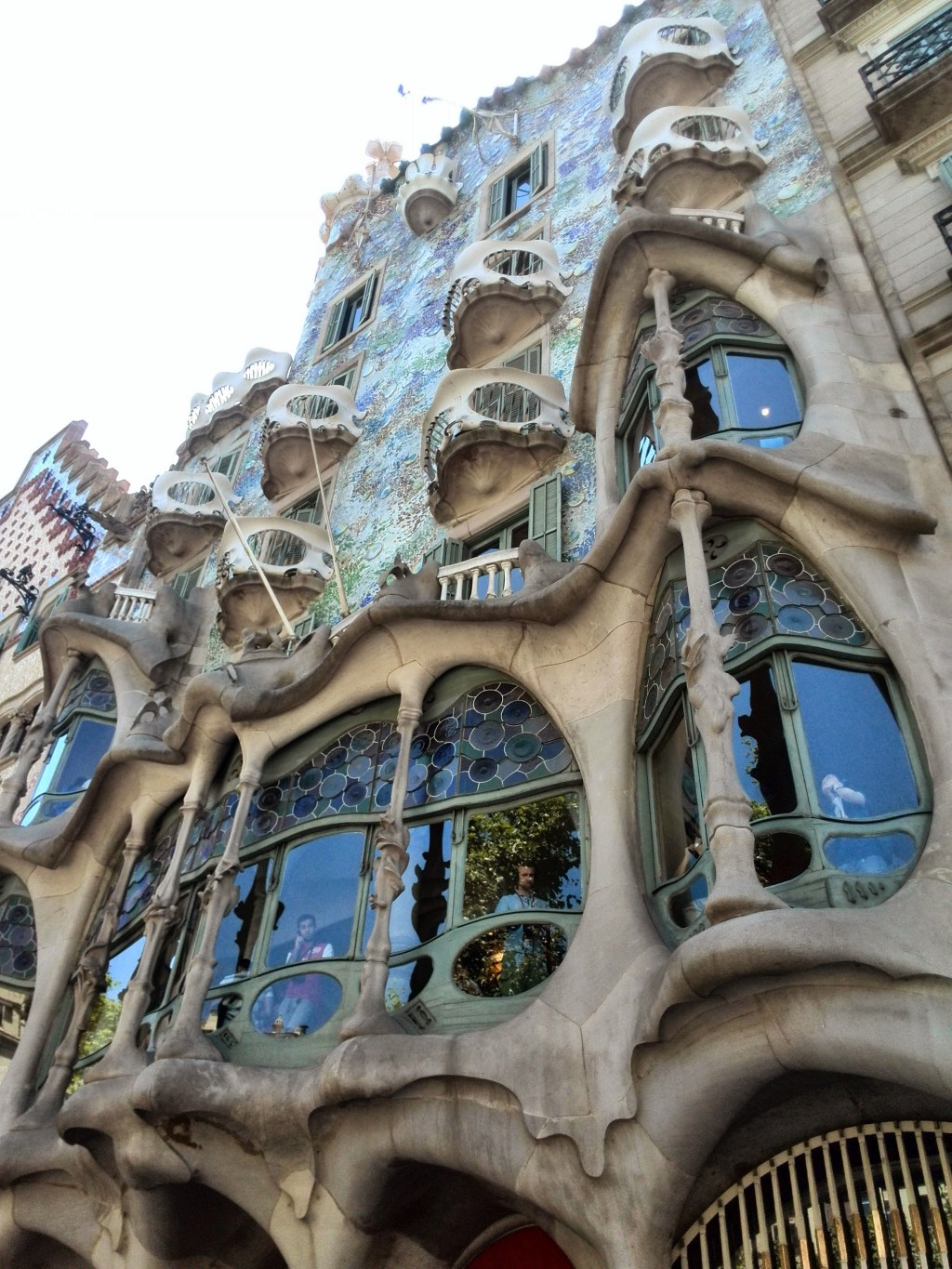
Every profession requires creative problem-solving, but in some, it’s their bread and butter, such as in architecture, marketing, or stand-up comedy. Of course, every profession has something to teach other disciplines, but architecture is the one we’re focusing on in this article. Architecture has many things to teach about the creative process that can be leveraged in other industries.
The creative process
The creative process may slightly vary for each architect, but generally, there are 4 key steps taught at school. These are: situational analysis, analogue cases, conceptualization, and design. Let’s take a look at each of them.
1. Situational analysis
Before you can start any project or start ideating, you need to understand the situation. In other words, where is this going to be built, is it a warm place or a cold place? Is it rural or urban? What are the local materials? What type of building is it? And the list goes on. Each project requires a unique research, but here’s a general list of the type of information you need to gather for a deep understanding of the problem and how to solve it.
- The location: Visiting the location (or getting some photos) can’t be skipped. This is essential to get an idea of the surroundings and where the project will be located, to see the terrain and understand if there are any things that should be considered such as, a magestuous tree right in the middle, a slope, or where the best view is. This step is key for the design process, to give the architect an idea of what you’re project could look like amongst the surroundings. .
- The climate: Understanding the climate is fundamental. A good architectural design uses materials, shapes and an orientation that will provide the right temperature and ventilation for each space. In a house for example, the kithcen would require a place that can be easily ventilated and close to a well lit window needed for cooking.
- The customer & use: It’s essential and maybe the most important thing to know who the project will be for. The dimensions and requirements are not the same for a hospital and it would be for a gym or a house. This point is especially critical when creating the blueprints, but it also important for conceptualization.
2. Analogue cases
Analogue cases are like mood boards, they help you get ideas of what and what not to do. Analogue cases should include an explanation of the local materials, what industry standards for that type of building, and any buildings that inspire you, maybe some out-of-the ordinary buildings, or something more traditional that evokes the local culture.
3. Conceptualization
By this step, you should have a very good idea of what the situation is (or problem to solve), and what the driving idea is. Conceptualization is finding the key idea of the project. It can come from anywhere, it could be a shape, a color and it could even come from the surrounding vegetation. It is the approach that an architect decides to take when designing the project. If we compare it to marketing, the equivalent could be the ke message in a marketing campaign. A concept can be a word, a sentence, or an emotion that you’re trying to convey.
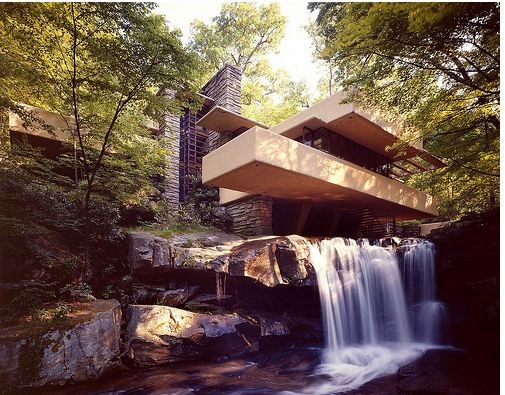
Examples of concept categories:
Concept categories can also be understood as the driving factor of the design process. Even though there might be a driving factor (let’s say nature), it does not mean that other factors will not be considered into the design. The seven concept categories (first in architecture) are: functional, material, contextual, conceptual, formal, collaborative, and philosophical.
4. Design
The fun part! In architecture, there are two important parts to a design: the interior and the exterior. Depending on the project, one might be a priority, for example in a factory, the interior generally leads what the exterior will look like. So to begin designing you first need to determine what will have the priority, this step will determine where you begin.
The design process consists of three phases. Phase 1: Idea creation. Phase 2: taking it to real life. Phase 3: developing the blueprints
Idea creation
It’s time to go crazy and get your ideas out. It’s time to turn your concept into a physical idea by sketching, making collages, models, or anything else that works well for you. Try to get out as many ideas out as crazy as they might seem, the more, the better. This step can be daunting, so here are a couple of tips:
- Forget about rules and limitations, get on paper every single idea that comes to you. Yes, even if it seems like it would never work in real life. Try to get at least 20 different ideas, this will reallt force you to think outside the box.
- Don’t discard any idea, keep all of them. you might want to go back and integrate something that you thought was useless in the beginning.
- Use any material that comes to mind. Paint, draw, make models, use clay, or crayons. You can also try mixing techniques, anything works at this point.
- Forget about size or dimensions. This step should be more about the visual and turning your concept into a tangible thing.
Finally, after dotting down all of your ideas, take a step back, sleep on it, and when you come back with a fresh mind, you can select the winning idea. If it seems like the idea is not as crisp as you’d want it to be, you can continue experimenting, maybe even mix and match different versions.
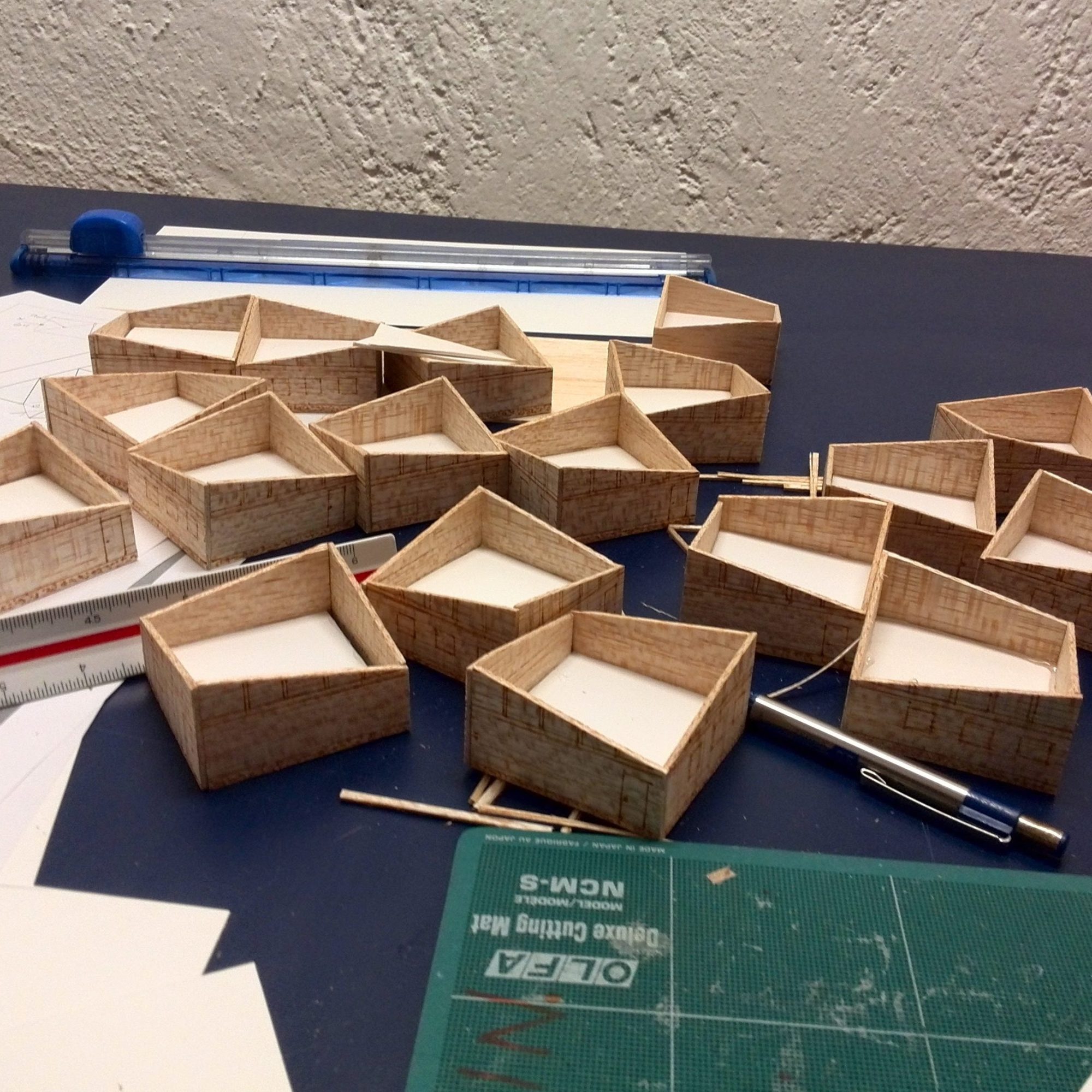
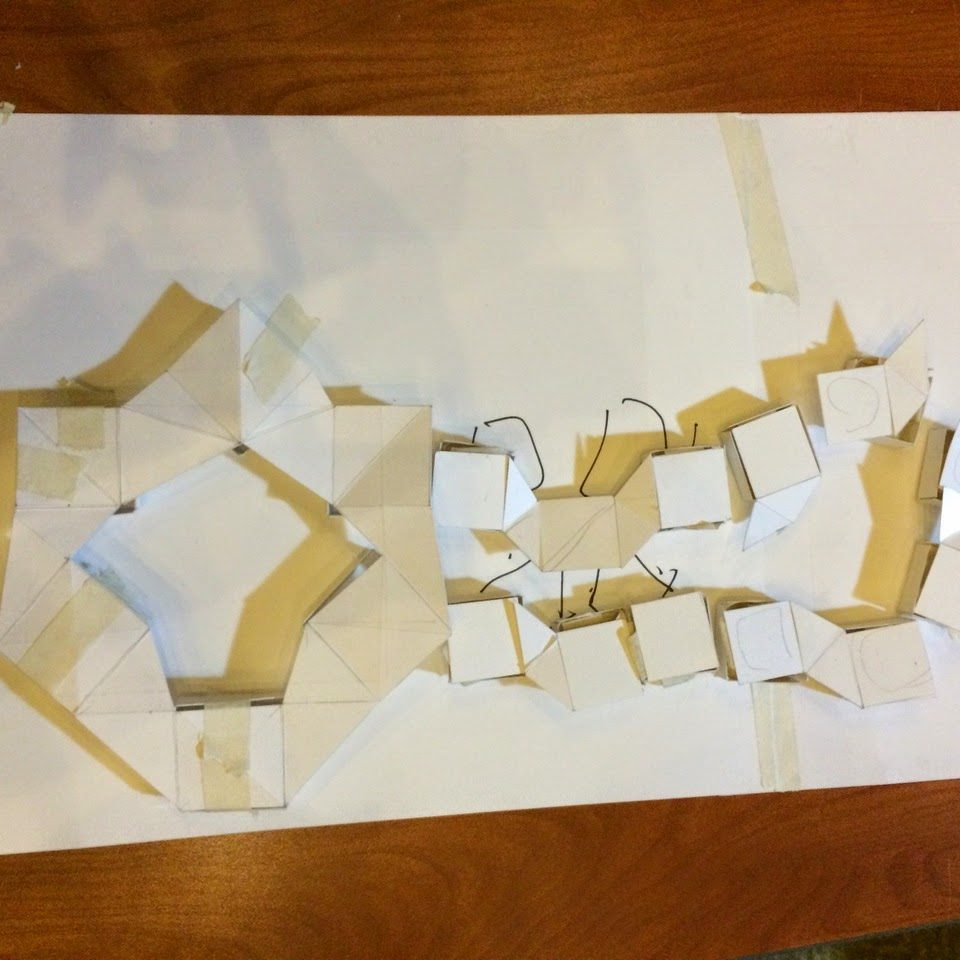
Taking it to real life
This step can be complicated. You’ve just come up with a great idea and now you have to ‘fit it back in the box’ by adding dimensions, requirements, and materials. Your winning design will be modified significantly at this point. So how do you do this?
Another way to think about this is a lego model. You know what it needs to look like, now you have to find the pieces to build it. The idea created in the previous excercise is the exterior. The interior, or the lego pieces are the spaces within.
You can start with the most important spaces, or the most obvious ones, for example, the parking lot will likely need to be close to the entrance. At this point, it is important to consider dimensions and any important limitations such as legal height specifications.
Developing the blueprints
The final step and also the most tedious in many cases. The shape, the materials, and the location of your spaces are mostly determined at thist time. Now’s the time to give the project structure and formality, to add the final details, but not any less important. In a blueprint, wall thickness will be determined, as well as the internal structure, lightning, water pipes, and all of the technical details. Since it is the last step, it is critical to review the project requirements (any specifics given by the customer) as well as any legal requirements.
Learnings
Theres countless things that architecture can teach other disciplines, but here are just a few that have resulted useful in my professional career within marketing and for personal projects. They are listed in no particular order.
- Research is key. Having an insight is not enough, it is of outmost importance that you understand the full context of the insight. Where did it come from? Who is the audience, what do they think where do the live, what other activities do they carry out in their day to day life? Being an expert in the special topic of interest is one of the most important parts of the creative process.
- Finding inspiration is a personal process. Learning how to trigger your moments of deep inspiration is essential. Doing this takes time and effort, following tips or doing things that other people can help you find the right pathway for you. Creating mood boards or analogue cases are always a good way to ignite your creative process.
- When seeking new ideas, break free! This should be a process without limits. You might find a great idea embedded into a ridiculous idea. Idea creation is not the time to limit your self, that will be done later on. Don’t be scared to sound ridiculous, to draw outside the line, to try out new materials, or to incorporate ideas from other domains.
- Be collaborative! Showing your projects to other people can be uncomfortable and embarrassing, but it is also a great tool for idea generation. Seeing your ideas from a different point of view can help you improve it. Remember: listen only to the good ideas!
References used & Some other useful links
- Inside the Mind of a Creative Architect, Architect Magazine
- Creativity and the Brain, Architectural Record
- Excerpts from Pierluigi Serraino’s New Book, The Creative Architect, Architectural Record
- How to Develop Architectural Concepts, First In Architecture
- Concept of Creativity and Innovation in Architectural Design Process, Babangida Idi Danfulani
Read more
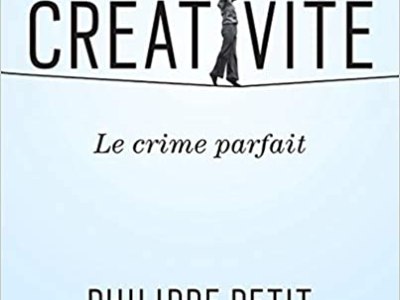
Créativité, the perfect crime
An unconventional book about creativity. Créativité is a book that will take you into Philippe Petit’s mind and straight into his creative process. Expect nothing ordinary. Philippe Petit is a French high-wire artist who does not have ordinary…

Is creativity important in advertising?
Yes, creativity is great. But does it really work? Well, we found a couple of interesting studies that have concluded, that a creative message does get more attention and leads to a more positive attitude toward the product…

The creative process in marketing
Most people (clearly talking about non-marketers) associate marketing with being experts in choosing colours, creating presentations, and outsourcing creative tasks to creative agencies. But marketing is so much more than that. A big part of the job is…
Something went wrong. Please refresh the page and/or try again.

 The Creative
Leave a comment